 THE FIRE LAB · OFFENSIVE DEFENCE
Twenty engines to Neasden. The equipment list is the story.
A waste transfer station in northwest London caught fire shortly before midday. Nobody was hurt and the cause is not known. But the authority responsible for the site published a warning about exactly this in January.
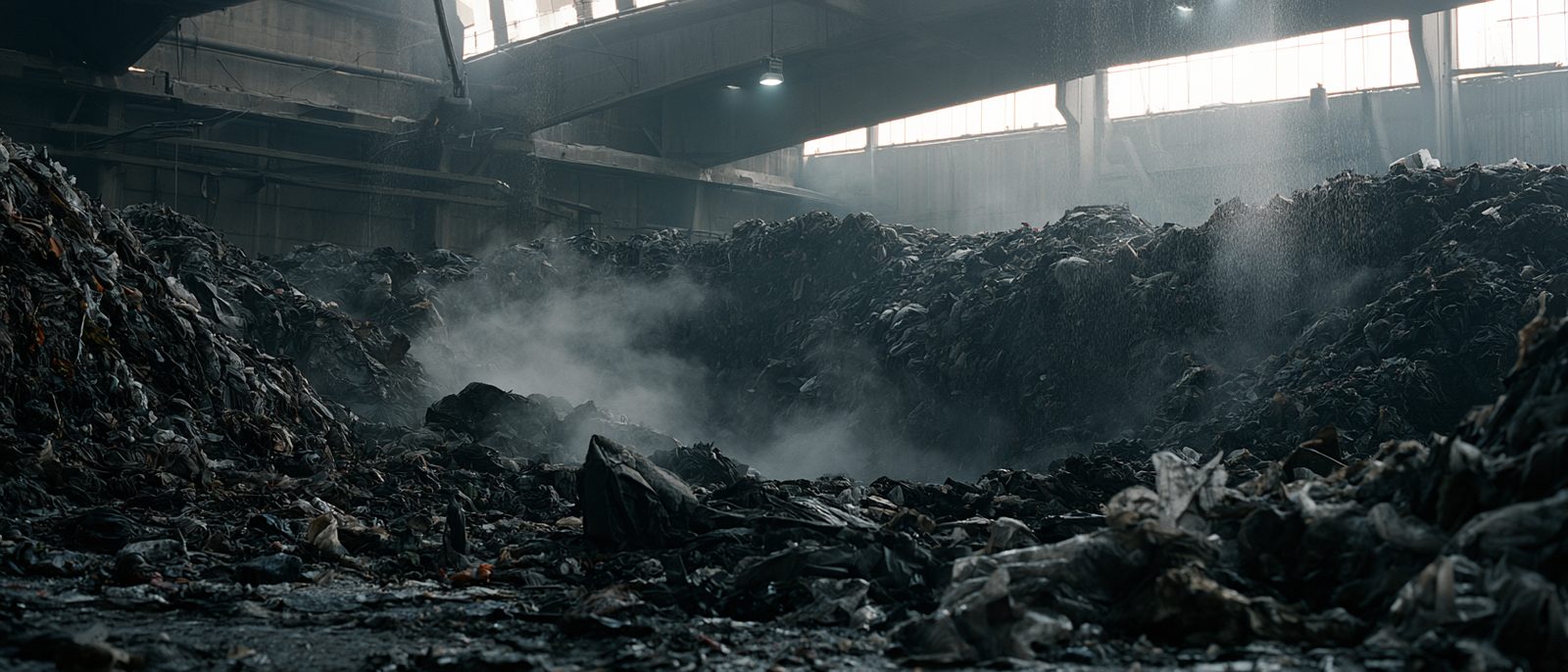
The first of more than seventy calls reached the London Fire Brigade at 11.34 this morning. Twenty engines and around a hundred and twenty five firefighters went to Hannah Close in Neasden, where an industrial unit of roughly a hundred metres by a hundred and fifty was alight. Crews came from Wembley, Park Royal and Willesden. Residents were told to keep their windows and doors closed. The Metropolitan line stopped. An Amazon warehouse next door, unconnected to the unit involved, was cleared.
Nobody was injured. Every employee on site is accounted for. The cause is not yet known and we are not going to speculate about it.
The site is the Wembley waste transfer station, operated by LondonEnergy on behalf of the North London Waste Authority.
What is worth reading closely is the equipment.
Alongside the engines and three thirty two metre ladders, the Brigade mobilised its drone team, a hose laying unit and a high volume pump. A high volume pump is what you send when the water available on site will not be enough and a great deal more has to be moved in from somewhere else. A hose laying unit is what carries it there. Together they are the signature of a fire that is expected to take a long time and an extraordinary quantity of water.
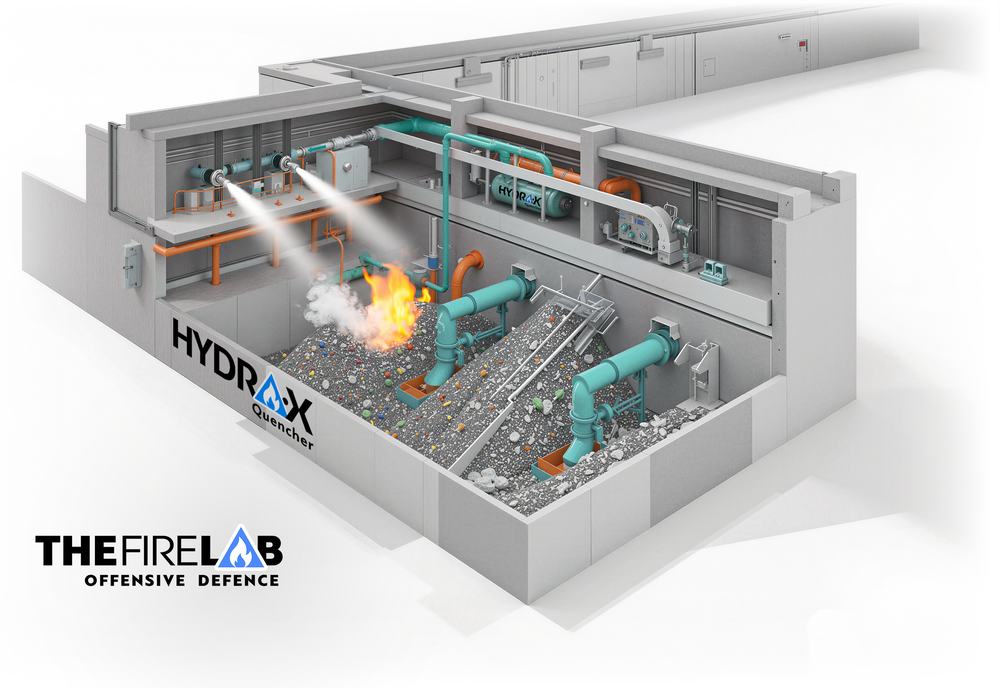
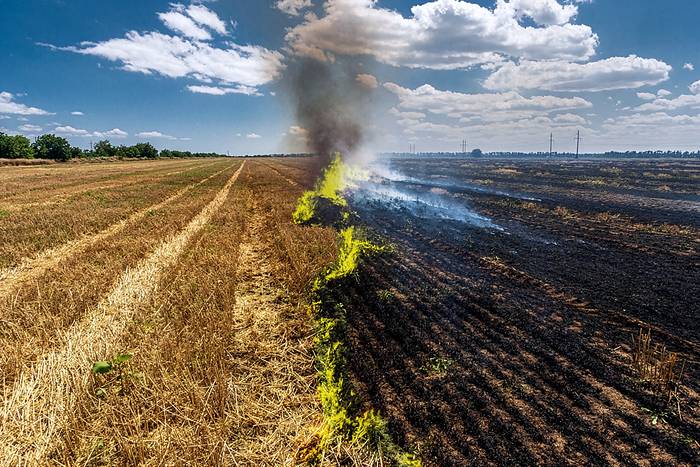
A fire inside a compacted waste pile behaves very like the one we were called to on a farm outside Johannesburg nine days ago, eight thousand kilometres away and in an entirely different context. Baled and compacted material is dense, porous and dry. Water applied from above runs across the surface and drains away while the combustion continues below it. You can work a pile like that for days, watch the steam, and never reach the seat of the fire.
Which brings us to January.
On Christmas Eve, at Hornsey Street waste transfer station in Islington, another North London Waste Authority site, a lithium ion battery that had been put in household waste was driven over by a loading vehicle. The vehicle was alight within ten seconds. Controlling it took enough water to flood the site and damage equipment, and both the transfer station and the neighbouring recycling centre were evacuated.
The Authority published the footage deliberately. Its chair, Councillor Clyde Loakes, said at the time that fires at their facilities had more than doubled in the past few years, and that a damaged cell can reach eight hundred degrees.
That was not a supplier making a point. That was the waste authority itself, in January, asking for government intervention.
The national picture supports them. Research by the insurer QBE, obtained under freedom of information and reported in May, found lithium ion battery fires up a hundred and forty seven per cent since 2022, running at almost five a day across the United Kingdom. The London Fire Brigade alone attended five hundred and twenty two such incidents in 2025, close to a third of the national total. The Environmental Services Association has called it epidemic. Industry estimates put the annual cost above a billion pounds.
None of that tells you what happened at Hannah Close today, and it is not offered as though it does. The Brigade will establish the cause in its own time.
What it does tell you is that this sector has spent two years watching the same problem arrive, and that the people running the sites have been saying so publicly and without much success.
The difficulty in these fires is almost never the water supply. It is whether the water reaches the place the fire actually is.
SOURCES
London Fire Brigade incident page, 28 August 2026 · North London Waste Authority statement, 28 August 2026 · North London Waste Authority, 19 January 2026 · letsrecycle.com, 12 May 2026, reporting research by QBE · Environmental Services Association.